Tell us about the job
Takes about a minute. No obligation.
Fuel type decides more than the burner inside a water heater. Fuel oil or kerosene heats more occupied homes in Grafton County, New Hampshire than any other fuel, at 43.2% (2020-2024 ACS 5-year). A contractor quoting a replacement here has to establish what the flue is serving, whether combustion air is drawn from the same space as the boiler or furnace, and whether a new high-efficiency unit can legally tie into existing venting or needs its own. Where oil and kerosene are this prevalent, those are not edge cases. They come up on most jobs.
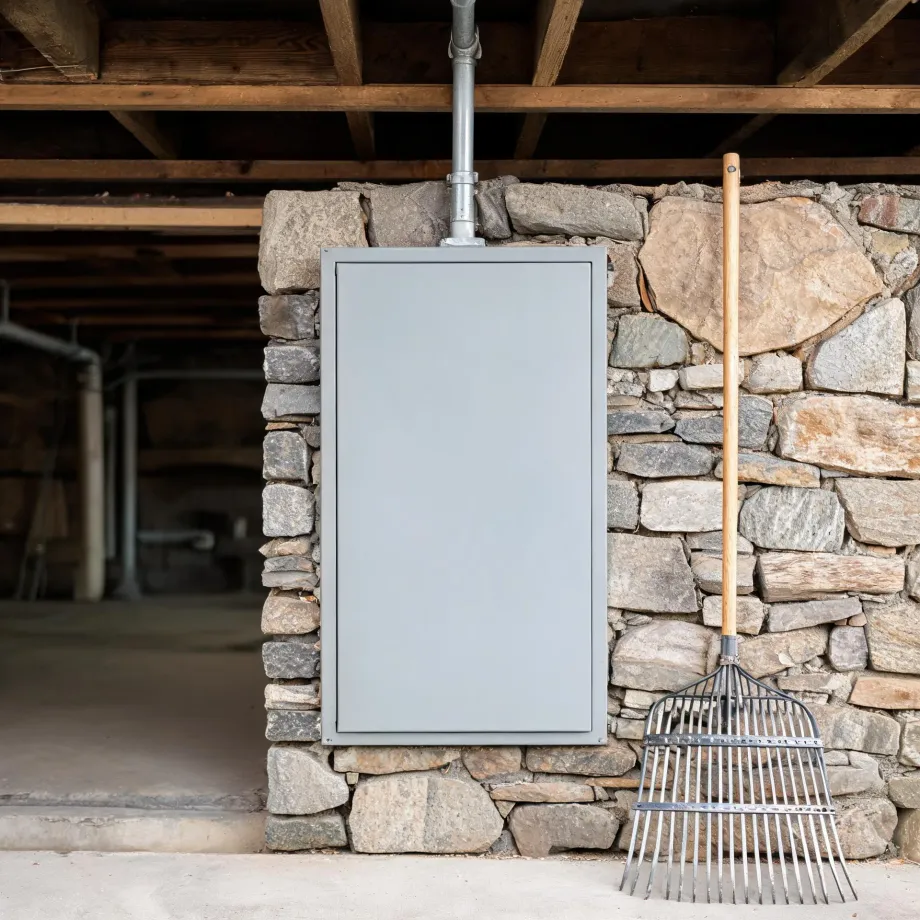
The service panel in a Grafton County house is where a water heater installation often stalls. Half the homes in Grafton County, New Hampshire were built in 1981 or earlier (2020-2024 ACS 5-year). Electrical service sized for the loads of that era was built around equipment that no longer runs in these houses, and what replaced it draws differently. A contractor pricing a new water heater has to open that panel and read what is actually there before the job can be scoped, because the panel determines whether the installation is straightforward or whether the electrical work is the larger part of the bill.
What Gets Installed With a New Water Heater
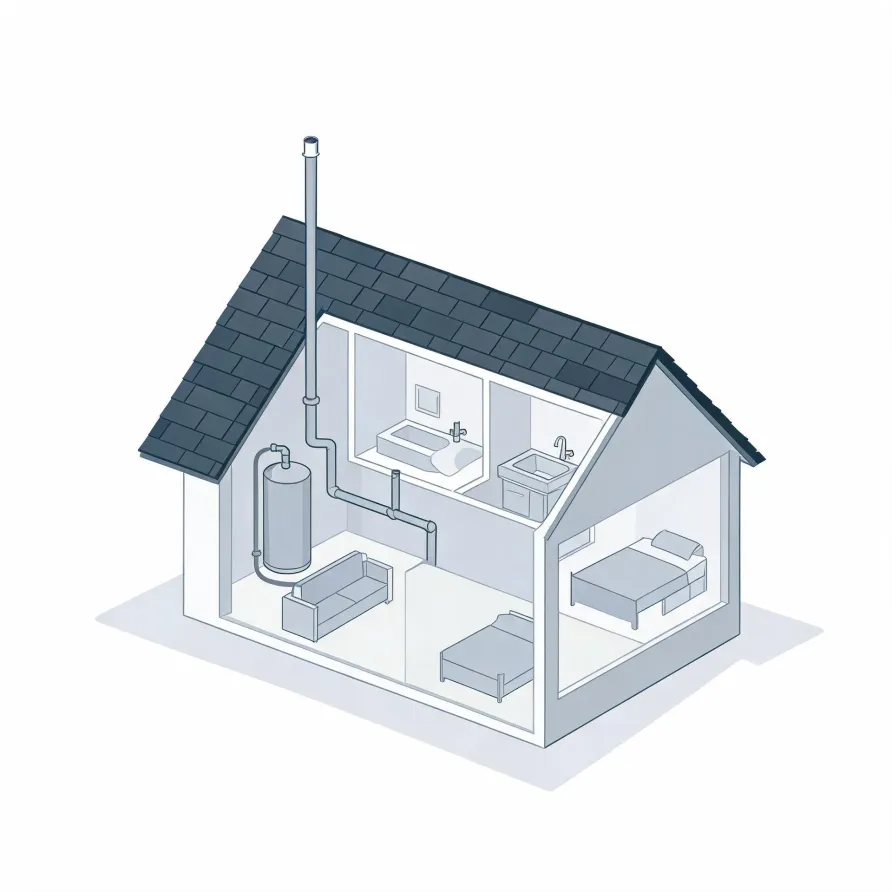
The tank is the centerpiece of the installation. It sits in a utility room, basement, or closet and holds a supply of water that a burner or heating element keeps ready. The tank comes with a pressure relief valve already fitted to its side, a safety device that releases if internal pressure climbs too high.
Cold water enters the tank through a dip tube that runs down its interior, and hot water leaves through a separate outlet at the top. A drain valve sits near the base of the tank. The flue pipe or vent hood connects at the top on gas models, running up and out of the house to carry combustion gases away.
The drawing shows a typical layout, and a licensed contractor determines exactly what applies to your home and its existing setup.
Find a contractor in Grafton CountyGrafton County, by the numbers
242 severe weather events were recorded in Grafton County, New Hampshire between 2015 and 2024.
NOAA National Centers for Environmental Information, Storm Events Database, bulk CSV export, events 2015-01-01 through 2024-12-31.Half the homes in Grafton County, New Hampshire were built in 1981 or earlier (2020-2024 ACS 5-year).
U.S. Census Bureau, 2020-2024 American Community Survey 5-Year EstimatesGrafton County, New Hampshire holds 51,920 housing units (2020-2024 ACS 5-year).
U.S. Census Bureau, 2020-2024 American Community Survey 5-Year EstimatesOwners occupy 71.3% of the occupied homes in Grafton County, New Hampshire (2020-2024 ACS 5-year).
U.S. Census Bureau, 2020-2024 American Community Survey 5-Year EstimatesWeather Stress on Water Heaters in Grafton County
Grafton County's climate puts real pressure on water heaters, driving harder cycles and shortening the window before a unit needs attention. How much a water heater works is a local question, and what happens outside shapes what a contractor finds inside.
242 severe weather events, 2015–2024. Source: NOAA National Centers for Environmental Information, Storm Events Database.