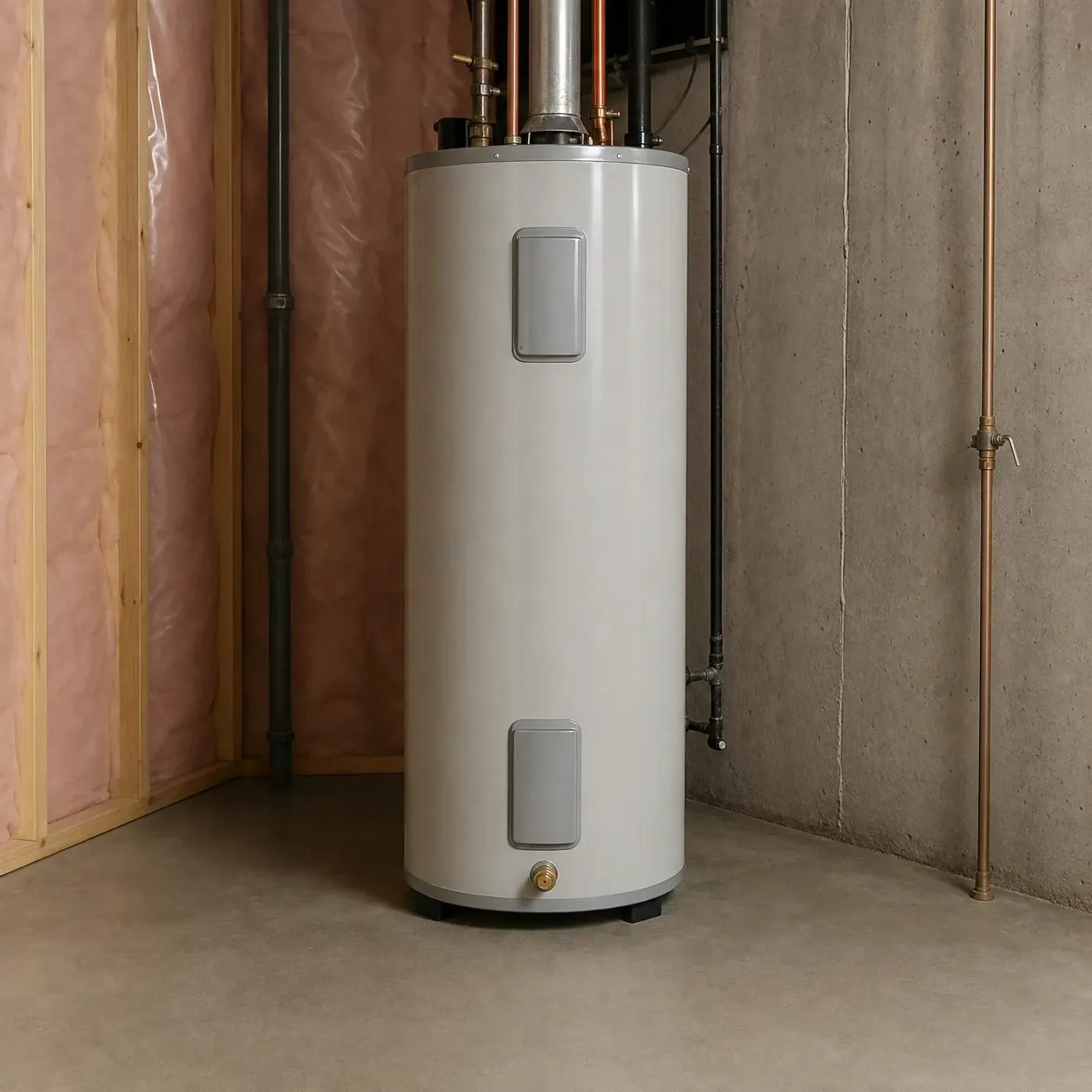
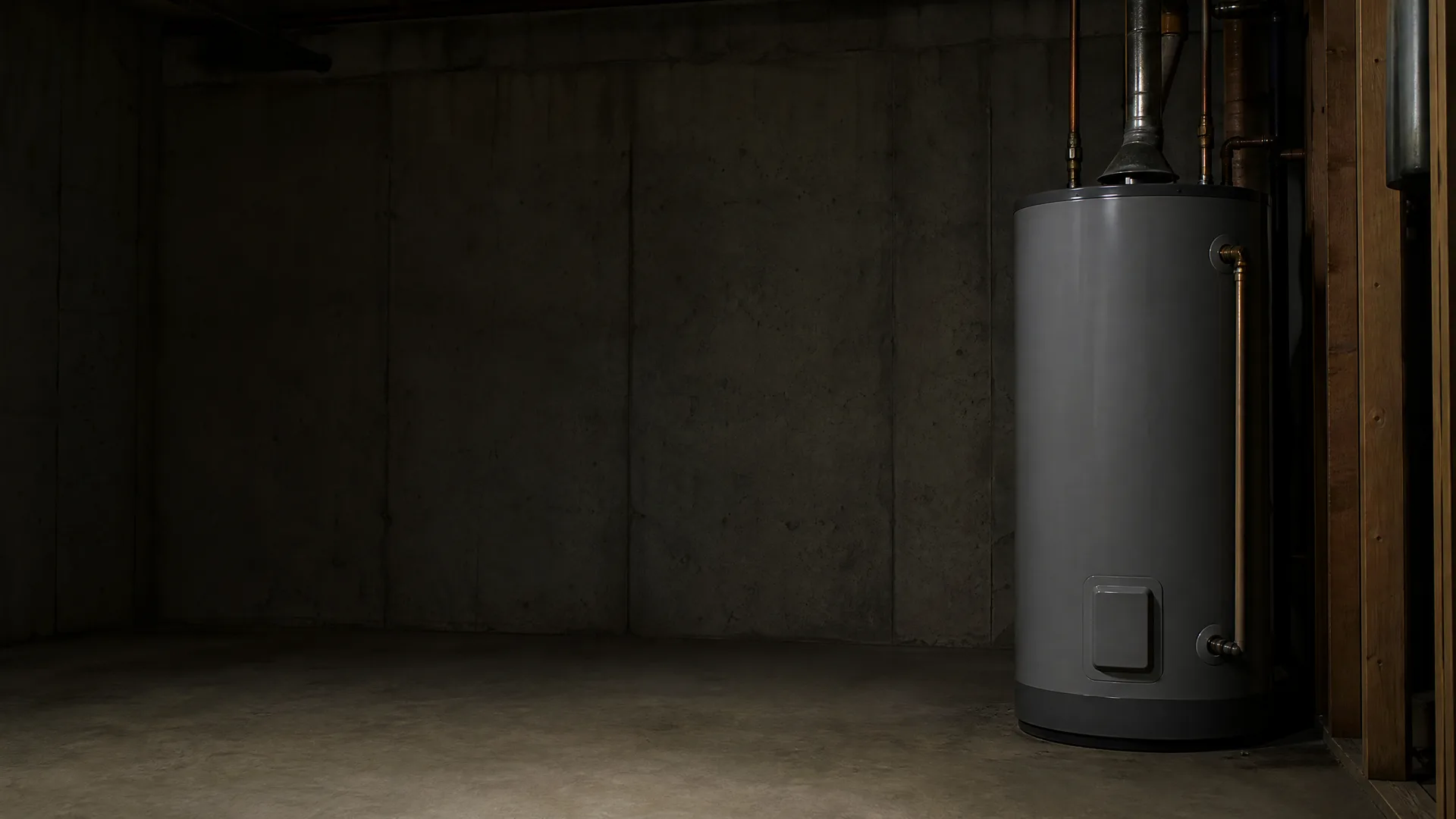
Send the request today and stop worrying about who to call.
Water pooling at the base of the tank, a damp spot on the basement floor, a hiss or drip you only noticed because you went down for something else. A leaking water heater in New Hampshire usually means a tank that's failing from the inside, a loose fitting, or a valve that's given out. None of those get better on their own.
Most homes here run on oil, and the water heater often sits near that same system, tucked in a basement or utility room where a small leak can go unnoticed for a while before it shows up as water damage or a spike on the electric bill. With power costs as high as they are in this state, a water heater running inefficiently or leaking steadily is money going straight into the ground.
You don't need to know whether it's the tank, the drain valve, or a fitting that's corroded through. That's what a licensed plumber is for, and the part that's actually on you right now is just getting one out to look at it.
That's usually the slow part. Calling around, explaining the same leak to three different answering services, waiting on callbacks that don't come, trying to tell from a phone quote whether someone actually knows what they're doing. None of that moves you any closer to a dry basement.
Send the form below and that search is over. You're not the one tracking down a plumber anymore. That part of this is done, and what's left is getting the leak looked at and fixed.
A leaking water heater usually means one of a few things. The tank itself may have rusted through from the inside, and once that happens, the leak won't stop, it only gets worse. A fitting or valve connection can work loose over time and just needs tightening or replacing. The pressure relief valve might be doing its job, letting out water because pressure or temperature inside the tank is too high. Or a loose drain valve near the bottom is letting water seep out slowly. The water in New Hampshire tends to run hard, and that mineral content builds up in the tank over years, which wears at the lining faster than it would elsewhere. If the leak is coming from the tank itself, there's no patching it. If it's a fitting or valve, that's a repair, not a replacement. Either way, the water sitting on your floor is worth dealing with now, before it reaches the subfloor or anything stored nearby.
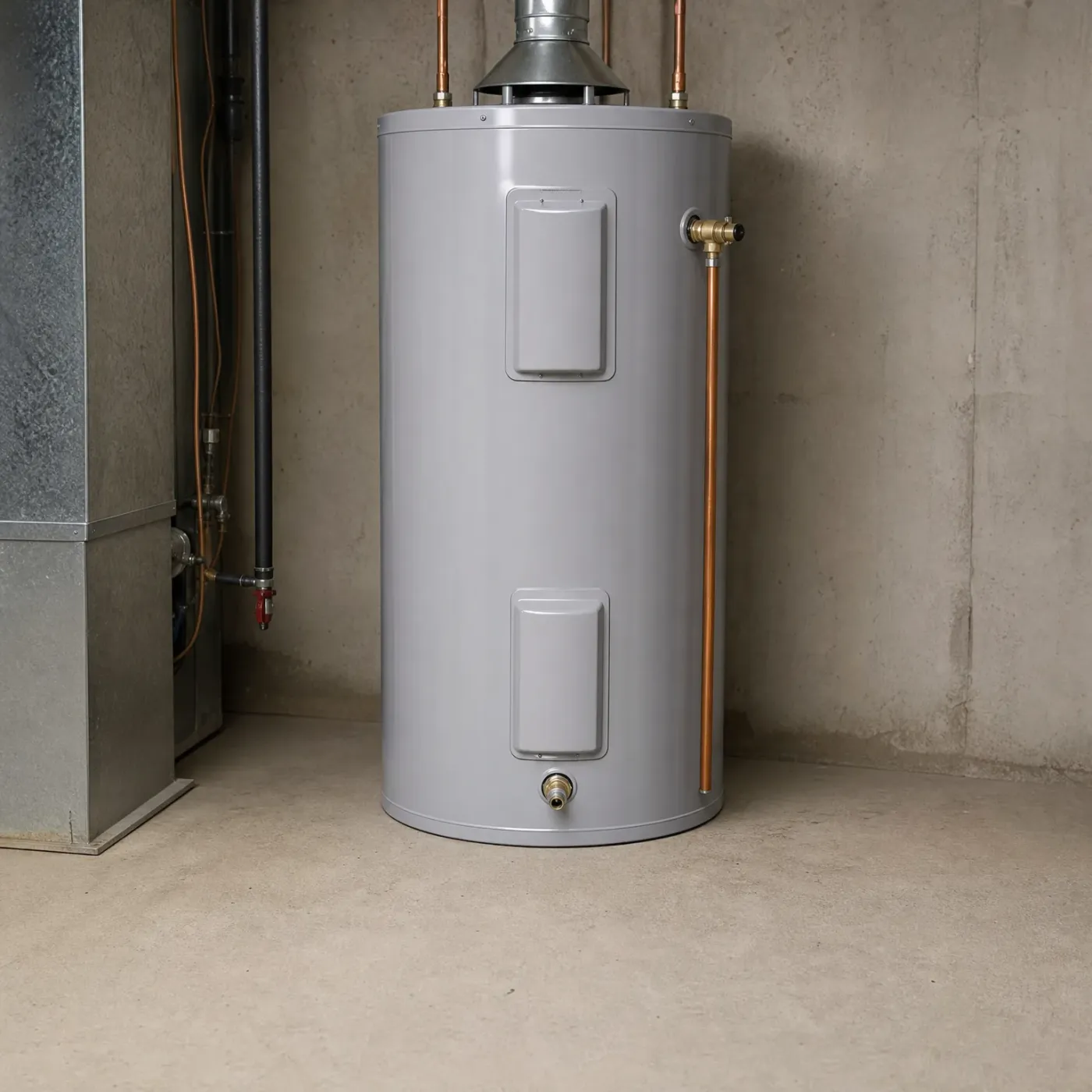
The valve, the drain, the fittings: all dry, all doing their job, nothing but a little condensation on the tank.
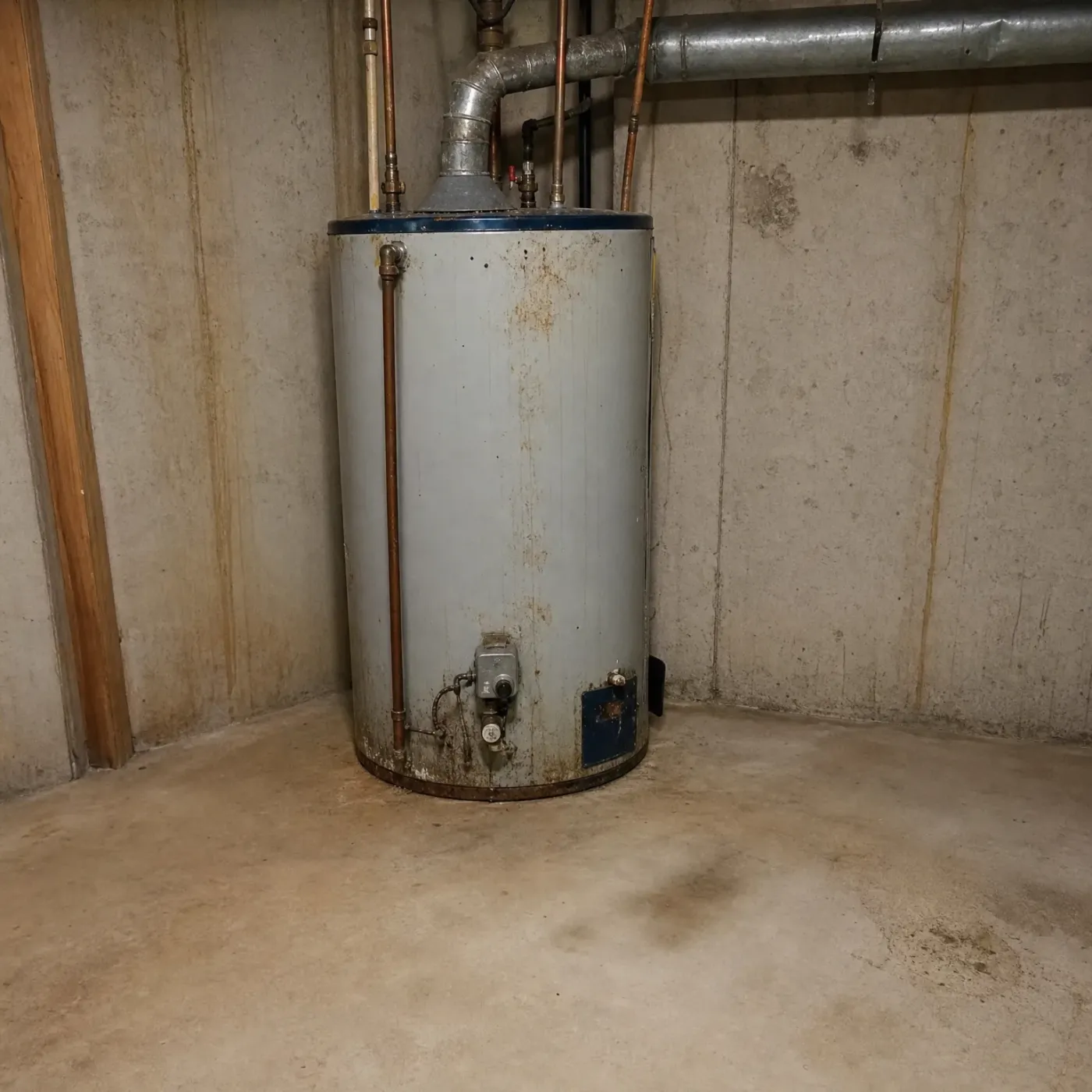
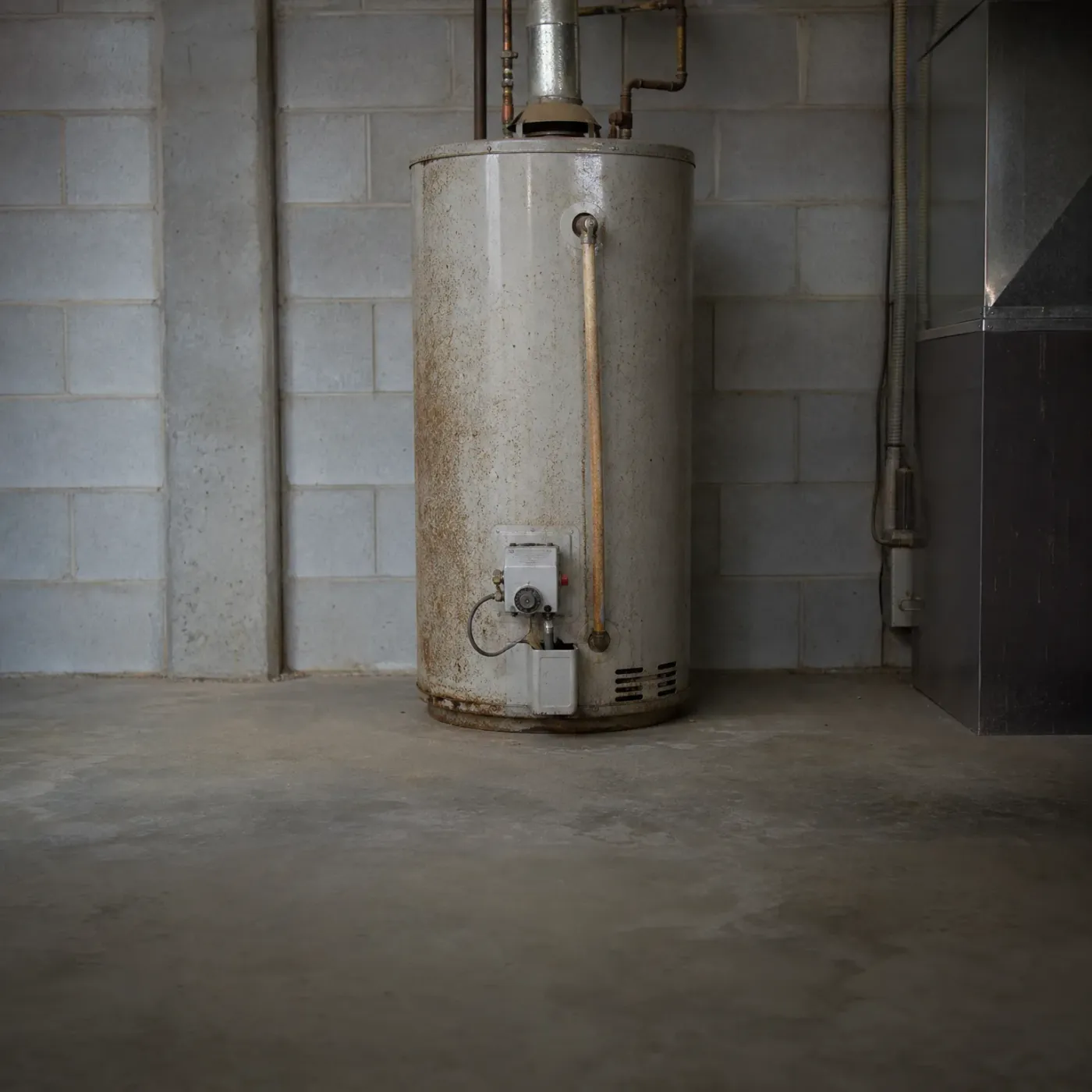
Rust eating through the steel, staining the floor where it drips: that tank is done, not fixable.
You go down to start the shower and the water never gets past lukewarm. Up in the bathroom the towel's still on the rail where you left it last night, and the mirror hasn't fogged at all. You go check the basement before work and find it: a puddle spreading from the base of the tank toward the floor drain, the carpet remnant near it soaked through. It's a Tuesday in March, cold enough outside that the oil furnace is still running most mornings, and now this. You put a hand near the tank and feel the damp on the steel itself, not just the fittings. You go back upstairs, send the form, and get back to getting ready, because the finding-someone part isn't yours to carry anymore.
A water heater doesn't leak for long before it becomes the only thing on your mind, especially with a basement to dry out or a shower that won't run hot. You could spend the evening calling around, explaining the puddle and the rust stains to one company after another, waiting on quotes that come back at different times with different answers. Oil heat already takes most of the attention your house needs, and with power costs what they are in New Hampshire, a water heater that's failing is not something to sit with while you shop for help. Send the request once and the search is done. You won't be explaining the leak five times or sorting through callbacks to find someone who can actually get to it. That part stops being yours to manage. What's left is the leak itself, the tank, the fitting, whatever it turns out to be, and getting someone qualified looking at it instead of a mop and a bucket.
Why the tank rusts from inside
A water heater tank is lined with glass, and a rod inside keeps attracting the corrosion so the steel doesn't have to. That rod wears down over years, and once it's spent, the tank itself starts taking the damage. Rust works through the steel from the inside out, so the outside can look fine right up until a seam gives way. By the time you see a stain or a puddle, the rust has already been working for a while. Nothing seals that from outside the tank. A patch or a new fitting won't stop steel that's already rusted through, which is why a tank leak and a fitting leak get treated so differently.
Oil heat changes what you should watch
Most homes in New Hampshire heat with oil, and a lot of those systems use the same boiler or a connected coil to make hot water, not a standalone electric or gas tank. If your hot water comes from that setup, a leak might show up near the boiler instead of a separate tank, and the fix depends on which part failed. Electricity here runs expensive, so an electric water heater running inefficiently costs more than it would elsewhere. A slow leak that seems minor now is worth having checked before it reaches the wiring or the boiler room floor.
Before you get your water heater repairAfter you get your water heater repair
Dealing with it yourself
You're searching contractor sites at ten at night, calling the ones that answer in the morning, describing the same puddle and rust stain to each one so they can quote you blind. Some don't call back. Some want to send someone out just to look, days from now. Meanwhile the water in the basement isn't waiting, and with oil heat and no hot water, a small leak turns into a bigger problem on its own schedule, not yours.
Sending the form instead
You describe the leak once. Finding a licensed plumber who handles water heaters in New Hampshire stops being something you have to manage. No more calling around, no more repeating the same explanation to a third company, no more sorting through quotes that aren't quite comparable. The searching is off your plate. What's left is waiting to hear back, which is a lighter thing to carry than a basement you're checking every hour.
39.5% of homes statewide heat with fuel oil
Most houses in New Hampshire are heated by oil, not whatever fuel runs the water heater, so the tank is often the only gas or electric appliance a homeowner deals with. When it starts leaking, there's no furnace habit or routine to fall back on for reading the signs.
ACS 2020-2024 5-year B25040
A leak doesn't get better on its own
A water heater that's leaking is either rusted through or has a loose fitting worth tightening. One means a new tank. The other is a quick fix. Either way, the puddle on the floor won't be smaller tomorrow, and the longer it sits, the more of the basement it reaches.
You don't have to spend tonight searching contractor sites, calling numbers that go to voicemail, and telling the same story about the puddle and the rust stain to each one before you even get a quote. Send the form once and that search is done. A licensed plumber will look at the tank, tell you which one you're dealing with, and take care of it.
One request and it's handed off
Answer a few questions instead of calling shop after shop.