






Profile view of a bearded man wearing a dark green baseball cap and a dark gray T-shirt against a plain light background.

How often to flush a water heater in New Hampshire

Step 1 of 3: Equipment

Once a year is right for most homes in New Hampshire. Flushing the tank clears out the sediment that settles at the bottom, and that sediment matters more here because a lot of homes run on well water with higher mineral content than city supply. Sediment sits between the burner or heating element and the water, so the tank works harder to heat the same amount, and the bottom of the tank corrodes faster underneath it. A gas water heater can get noticeably loud, rumbling or popping, once that layer builds up. If yours sits in an unfinished basement near an oil furnace, it's easy to forget about since nothing about it looks wrong from the outside. Skipping the flush for a few years doesn't ruin the tank overnight, but it shortens its life and raises what it costs to run, which adds up with New Hampshire's electric rates if your unit is electric.

A gray-haired bearded man in a dark coat and scarf dusted with snow stands smiling in a dimly lit entryway with a white front door, a side table with a lit lamp, an oval mirror, and a patterned rug.
An older bearded man in a dark snow-dusted coat and gray scarf stands just inside a dimly lit home entry, with a framed picture, lit table lamp, and an adjoining room with a fireplace behind him, and snow visible through the open door.
A gray-haired, bearded man in a dark snow-dusted coat stands smiling in a dimly lit entry hall with a staircase, a lit table lamp, a framed picture, and a living room visible through a doorway.
An older man with gray hair and a beard, wearing a dark jacket dusted with snow, stands smiling in a dimly lit hallway with lamps and a living room visible behind him.

Is your water heater overdue for a flush

Check the bottom of the tank for a popping or rumbling sound when it heats. That's water working its way through sediment instead of moving freely. You might notice hot water running out faster than it used to, or the tank taking longer to recover between showers. Water that looks slightly rusty or has a metallic smell when it first runs hot is another sign. None of this fixes itself. Left alone, the sediment layer keeps the burner or element working harder to heat the same amount of water, and with electric rates in New Hampshire among the highest in the country, that shows up on the bill. It also shortens how long the tank lasts before it needs replacing.

A gray cylindrical water heater with copper pipes stands in a basement corner beside a metal duct and wood framing, next to a plain beige wall and concrete floor.

Well water leaves more behind

City water runs through treatment that strips out most of the minerals before it ever reaches your tank. Well water doesn't get that step. Whatever is in the ground comes straight through your pipes and into the tank, where it settles at the bottom every time the water heats. If your house is on a well, that layer builds faster than it would on city supply, and a yearly flush is what keeps it from getting ahead of you.

A gray cylindrical water heater with copper pipes stands in a corner of a basement utility room beside metal ductwork and white PVC piping.

What the sediment does over time

The burner or the lower heating element sits right under that layer, and it has to push its heat through the sediment before it reaches the water. That takes longer and uses more power, which costs more here than in most states. Left alone, the buildup hardens against the tank floor and can crack the glass lining underneath it. Once that lining is gone, the steel tank is exposed to water directly, and that's how a tank starts to leak years before it should.

What actually happens when a water heater gets flushed?

You know you're supposed to flush the tank, but nobody's ever explained what that actually involves. Is it just draining the water out, or is there more to it? Knowing what the process looks like helps you understand why it matters and what you're paying for if a contractor does it.

A hose on the drain valve, and the tank runs until it runs clear

The power or gas to the heater gets shut off first, so the burner or element doesn't kick on with no water inside. A hose runs from the drain valve near the bottom of the tank to a floor drain or outside. Once the cold water supply is shut off too, the valve opens and the tank empties, carrying the loose sediment out with it. On a lot of well water systems in New Hampshire, what comes out first is cloudy or has grit in it, and the valve stays open until it runs clear. Then the cold supply goes back on to refill the tank before power or gas is restored.

A light gray cylindrical water heater with two access panels stands on a concrete floor against a concrete wall, with copper and black pipes beside it and an unfinished wood stud wall to the right.
Flushed on schedule, the tank stays clean inside and the valve and connections stay free of corrosion.
An older white gas water heater with rust staining and an exposed vertical pipe stands against a concrete block basement wall, with a metal flue above and black vertical pipes to the right.
Skip the flushes long enough and rust takes hold at the base, the kind that ends in a leak, not a repair.
  1. Power or gas to the heater gets shut off first.

  2. A hose runs from the drain valve to a floor drain.

  3. Cold water supply is shut so the tank can empty.

  4. The tank drains and sediment flushes out with it.

A woman wrapped in a thick beige fleece blanket sits on a sofa with an open book on her lap, beside a lit table lamp, with a frost-covered window behind her.
An older woman with gray hair in a bun and glasses, wearing a beige knit sweater, smiles while looking to the side in a warmly lit kitchen, with a loaf of bread on the counter in the foreground and a snowy scene outside the window.

A local pro for your water heater maintenance

A licensed local pro takes the request for your water heater tune-up.

Sending the form costs nothing.

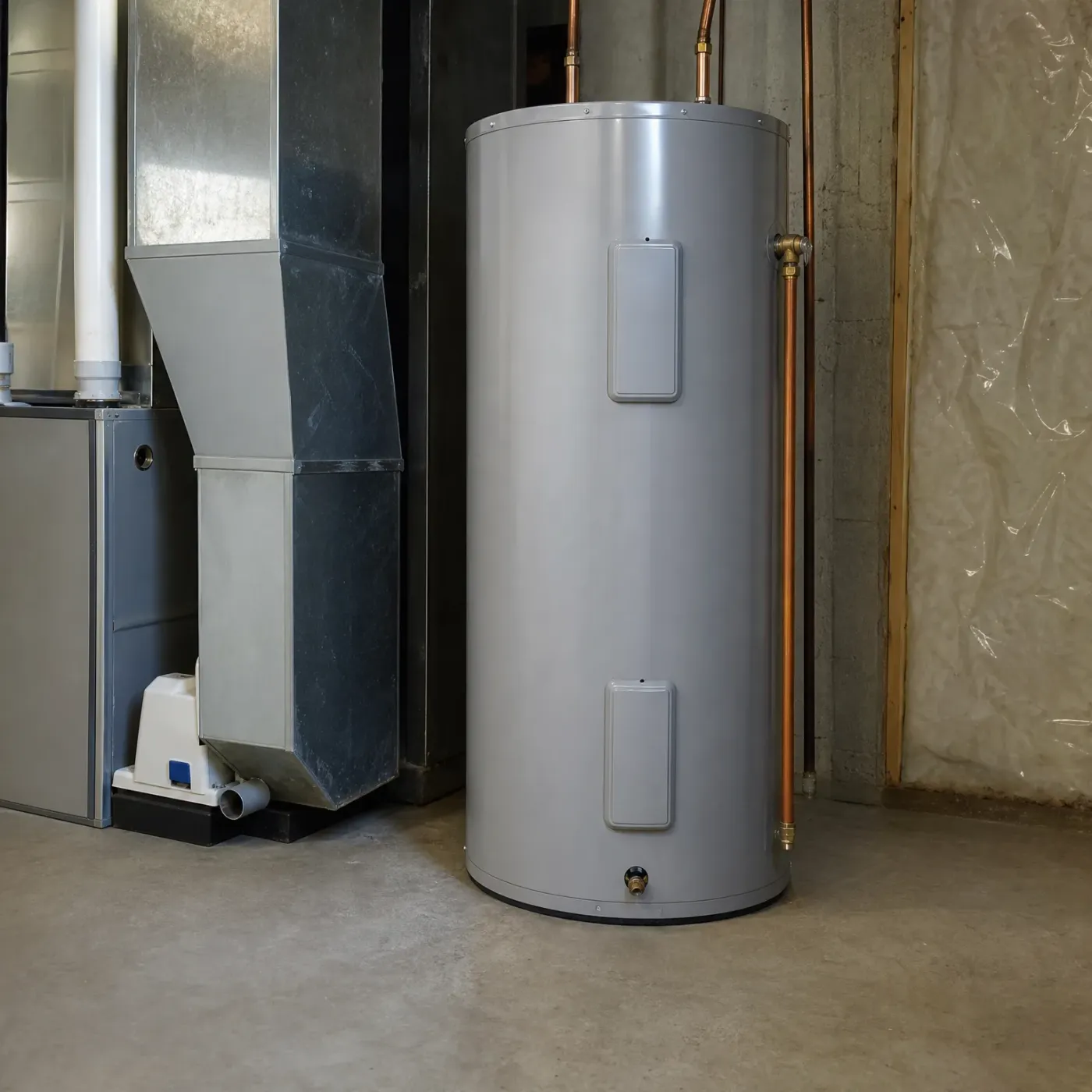
A gray cylindrical electric water heater with two access panels stands on a concrete floor in a basement, with copper pipes above and behind it, sheet-metal ductwork and a furnace to the left, and a plastic-covered insulated wall to the right.

Kept up on schedule

A tank flushed on schedule looks like this. Copper fittings stay clean, the floor underneath stays dry, and the unit runs alongside the rest of the mechanicals without drawing attention to itself. Nothing at the base hints at what's inside.
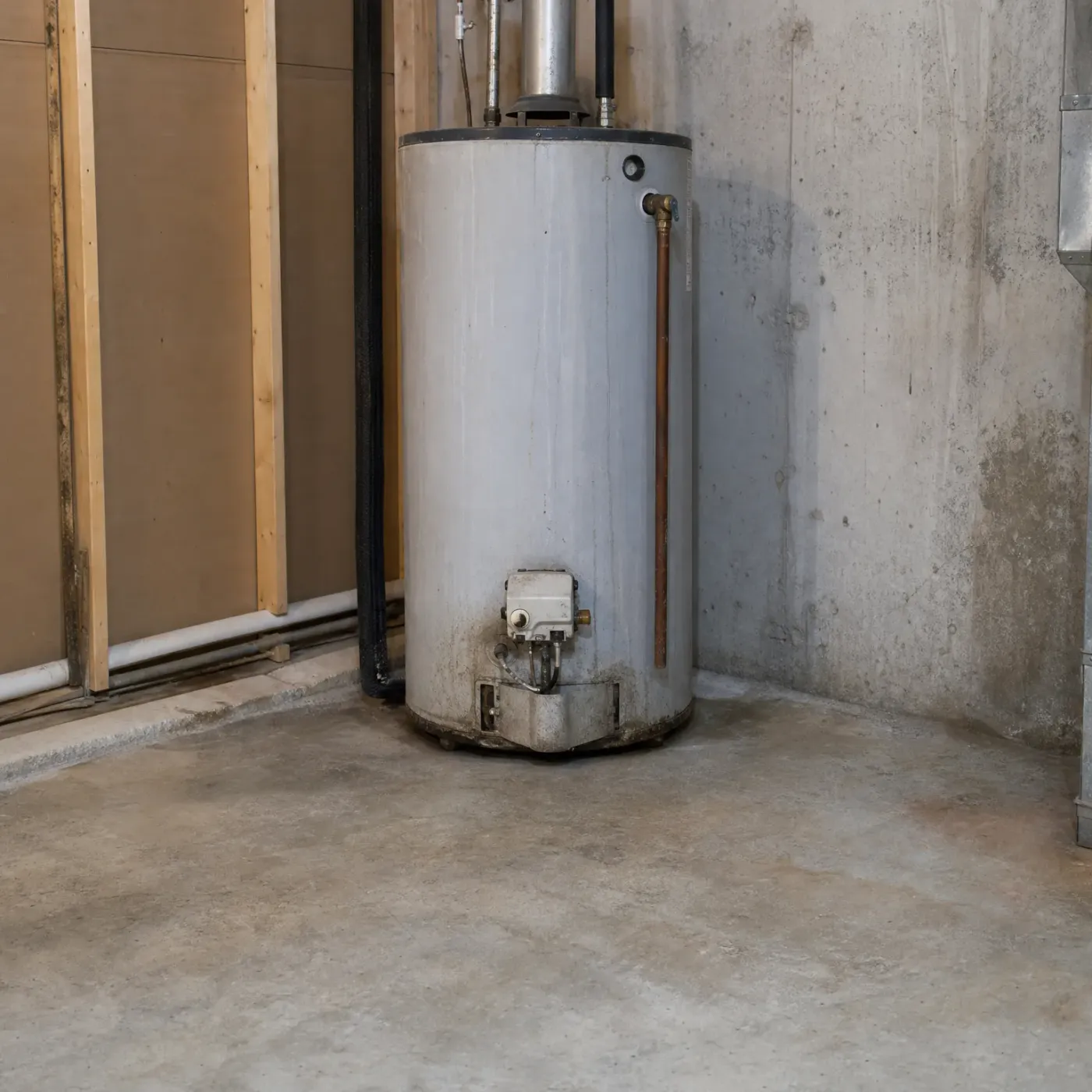
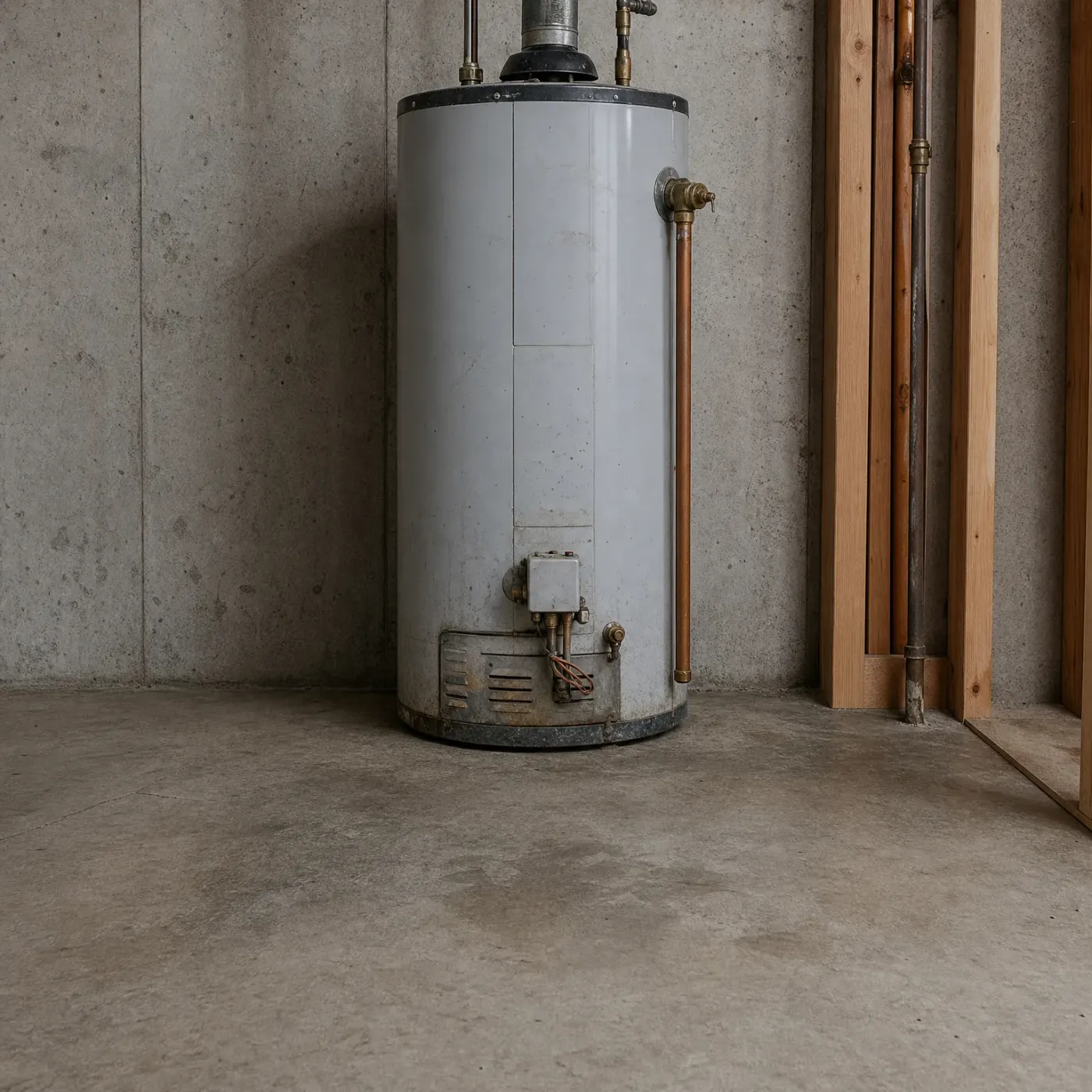
An older gas water heater with a copper pipe and flue stands on a concrete floor in a basement corner between a bare concrete wall and an unfinished wood-framed wall.

Left too long

Skip enough years and the signs show on the outside too. Rust and grime build up around the base and the burner, the copper fitting shows its age, and the corner it sits in starts to look like the tank is the oldest thing in the room.

39.5% of homes statewide heat with fuel oil

With that many homes here running on oil heat, your water heater is most likely a separate gas or electric unit working on its own all year. That means the tank gets no break in summer, so sediment keeps building whether or not the furnace is running.

ACS 2020-2024 5-year B25040

A tank flushed every year keeps its full capacity. You get the same amount of hot water out of it in January as you did when it was new, because sediment isn't sitting at the bottom eating into the space.

Skip it for a few years and the tank is quietly working harder to give you less. The burner or element heats around a layer of buildup, and with power costs what they are in New Hampshire, that difference shows up on the bill.

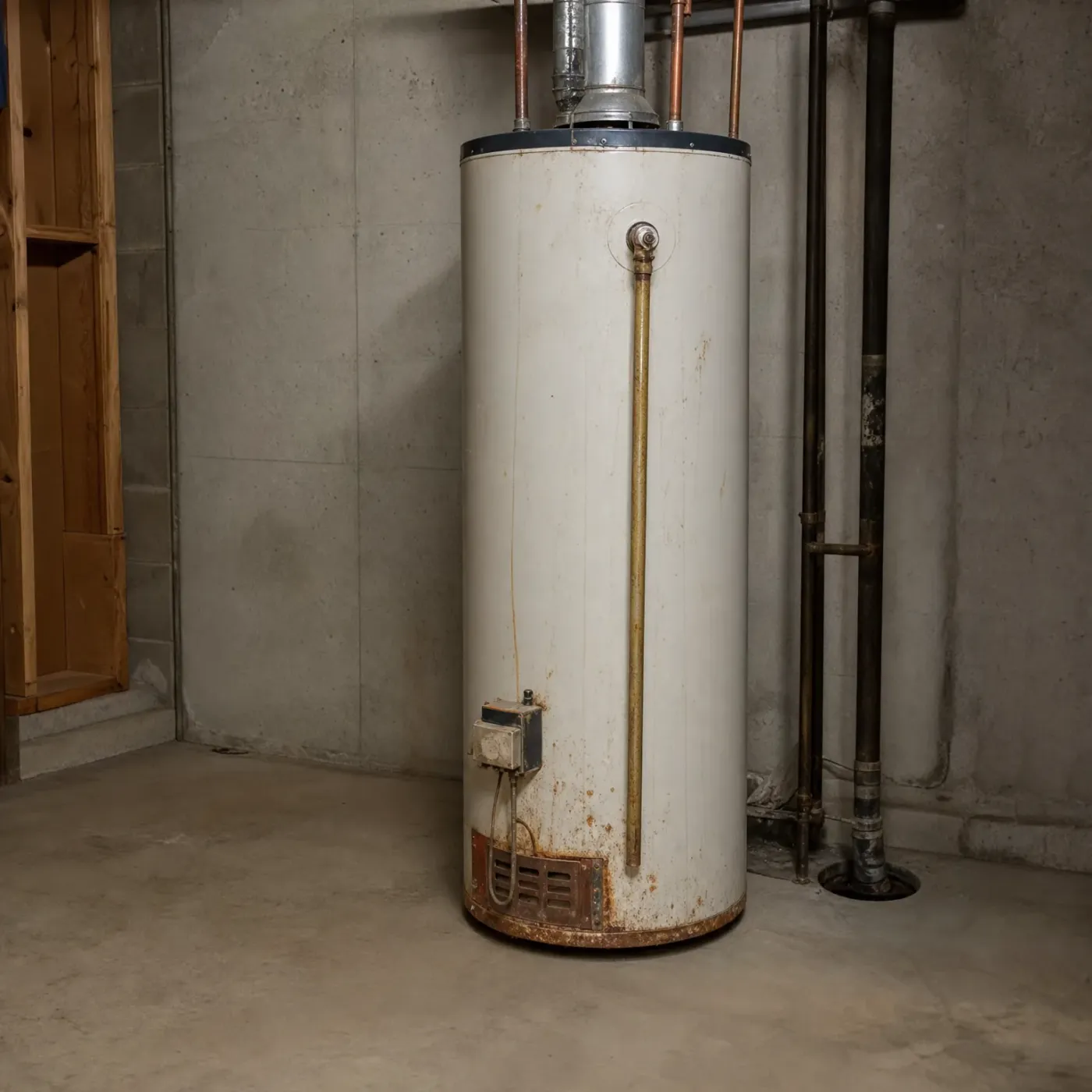
An older gray gas water heater with copper and brass piping stands on a concrete floor against a concrete wall, beside exposed wooden wall framing and vertical pipes.
Before you get your water heater maintenance
A gray cylindrical water heater stands on a concrete basement floor against a plastic-sheeted insulated wall, with copper supply pipes, a blue expansion tank, a black vertical pipe, and exposed wood wall framing at right.
After you get your water heater maintenance

Once a Year, On Schedule

  • Once a year keeps sediment from building up enough to cost you capacity or damage the tank.
  • A heater running on well water has more reason to stay on that schedule than one on city water.
  • A contractor who flushes tanks all year in this area knows which fittings corrode first and what to check before draining.
  • Matching with one licensed local contractor means a single point of contact instead of several companies calling about the same job.
  • Skipping a year or two doesn't ruin a tank outright, but it moves you closer to the rust and leaks that do.
  • Where you land on that schedule is worth knowing before the water heater tells you itself.

Once a year is the number that holds up here, and that's true whether the tank runs on well water or city water, though well water gives you more reason to keep to it. Sediment builds whether anyone's watching or not, and a tank that never gets flushed is working harder than it needs to for the same amount of hot water. None of that requires guesswork once you know what to check and when to check it.

What makes the schedule easy to keep is having someone who already knows this equipment look at yours. A contractor who flushes tanks across this area all year has seen which fittings corrode first in homes on well water, what a tank sounds like right before it needs attention, and what a normal drain should look like compared to one that's overdue. That's a different conversation than explaining your setup from scratch to whoever picks up the phone.

Matching you with one contractor, local and licensed, means one person looking at your situation rather than a handful of companies working the same lead. They can tell you where your tank stands and what, if anything, it needs before the schedule slips and the tank starts showing it in ways that cost more to fix than a flush ever would.

A wooden front door with six small glass panes and a narrow sidelight, set in a shingled house entry with white trim, reached by stone steps flanked by a planted urn with purple flowers and leafy branches in the foreground.
Exterior corner of a house with beige horizontal lap siding and a black-framed window, with white hydrangeas, ornamental grasses and low plantings along a flagstone patio.
Corner of a house with tan lap siding and a window, a brick step edge, flowering white hydrangeas and green shrubs beside a flagstone walkway leading to a white picket fence and a tree in backlit sunlight.
House exterior with cream horizontal lap siding, a dark-framed window, a black wall lantern beside a wood door, potted shrubs on stone steps, and white and pink hydrangeas in the foreground garden.
Corner of a cream lap-sided house with a white-framed window and dark shingled roof, beside a white-flowering hydrangea shrub, a clipped hedge, mulched bed and lawn.

Get the right pro for your water heater

The pro who reaches out is licensed in New Hampshire.

Request a pro

You're not committing to anything by asking.