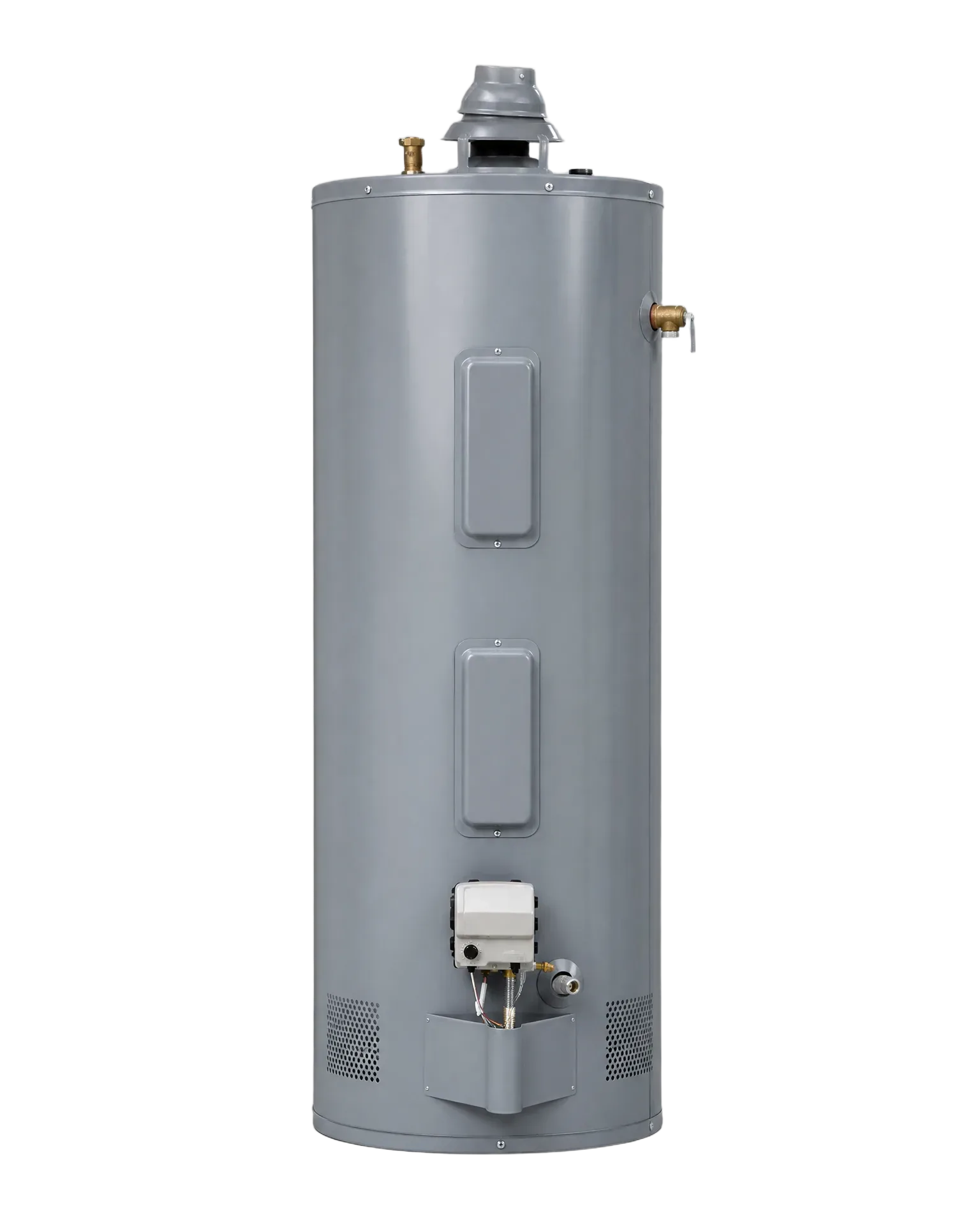
How long does a water heater last in New Hampshire?
Your water heater has been running for years and you're wondering if it's on borrowed time, or maybe it just failed and you need to know what's normal before you decide what to do next.
8 to 12 years, often less if it's electric
Most water heaters last 8 to 12 years. Tank units fail from the inside out, as sediment builds up and the tank itself starts to rust through, and once that happens there's no fixing it. Gas and oil-fired units often last toward the longer end of that range. Electric units can wear out sooner, since electric rates in New Hampshire are among the highest in the country and that same cost pressure means a failing element or a tank losing efficiency gets noticed fast, in the bill as much as in the water. If your water heater came with the house, check the manufacture date on the label rather than guessing by how long you've lived there.

Sediment builds up on the tank bottom for years.
The burner or element works harder to heat through it.
The anode rod wears down and stops protecting the tank.
Bare steel starts to rust once the rod is gone.






39.5% of homes statewide heat with fuel oil
If your house is one of the many here heating with oil, your water heater is probably a separate tank, not tied into that boiler. It still ages on its own schedule, so a furnace or boiler in good shape tells you nothing about what's happening in that tank.
ACS 2020-2024 5-year B25040
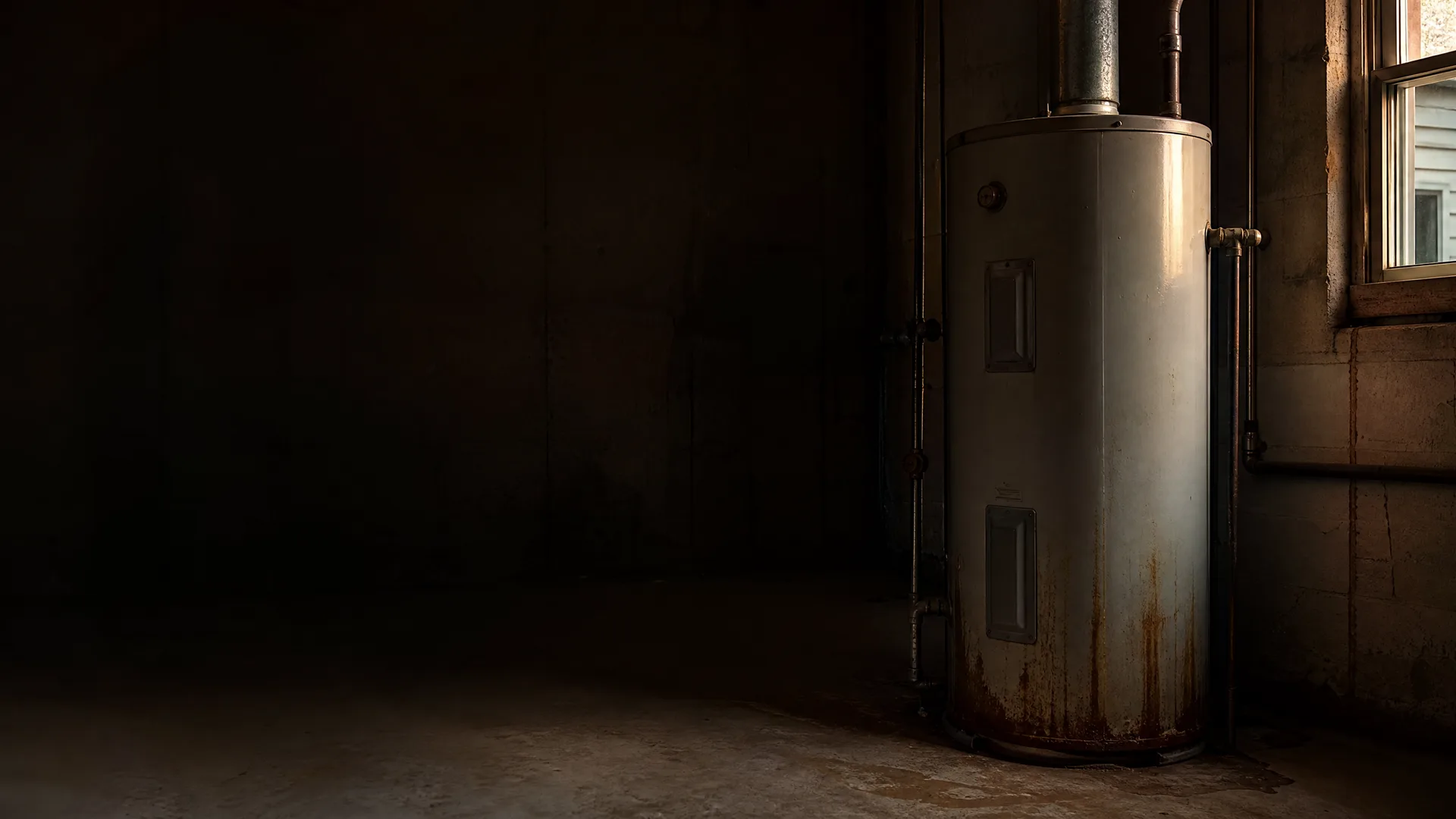
You go down to the utility room after dinner to grab something from the shelf and the light catches it: a thin trail of rust running down the side of the old tank, pooling faint and orange where it meets the floor. The room is quiet, the way it gets once the house settles for the night. You crouch down and touch the base. Damp. Not dripping, just damp, the way steel gets right before it gives out. You stand there a minute doing the math on how long that tank's been down there. Outside, the evening air is cool and dry, the kind of New Hampshire night where nothing else feels wrong. Just this.
Skip calling around

Your request goes to one pro, not a list of companies.
Sending the form costs nothing.
Where Your Tank Stands Now
- Most water heaters in New Hampshire run 8 to 12 years before sediment and a worn anode rod catch up with the tank.
- Rust at the base or on fittings means the tank is failing, not just getting old, and repair won't buy much time.
- A separate tank on an oil-heat system ages on its own schedule, so the boiler's condition says nothing about the water heater.
- Once you know where the tank stands, the only decision left is whether to replace it now or wait for it to fail on its own.
- A local installer who works on these tanks every week has seen which brands and setups tend to fail first in this area.
- Going through one licensed contractor who already knows the common failure points here beats explaining the same rust and the same age to several companies.
Eight to twelve years is the window, and rust at the base moves you to the end of it no matter what the calendar says. If your water heater sits apart from an oil boiler, nothing about the boiler tells you how the tank is doing. It has its own anode rod wearing down, its own sediment building on the bottom, and it fails on its own timeline. Once you've looked at the tank and know whether it's rusting or just old, there's really one decision left: replace it now or wait and risk finding out the hard way, on a night when the water on the floor isn't something you can mop up and forget.
When you're ready for that, you're not stuck calling around and repeating the same description of rust and age to one company after another. A local installer who works on these tanks every week in New Hampshire has seen which brands hold up and which ones start leaking early, and what tends to go wrong with setups like yours. You get matched with one licensed contractor who already knows the common failure points in this area, not a list of five companies competing for the callback. That means one conversation, with someone who already has a sense of what they're walking into before they open the utility room door. The tank itself won't wait any longer than its own age and condition allow, but finding someone qualified to deal with it doesn't have to take up any more of your evening than it already has.

Water Heater Installation
Describe it once

- Describe your water heater job, and a local pro who handles it gets in touch.
- A local installer who puts in water heaters gets your project.

- Once you send the form, finding a pro is off your list.
- After you send the request, you're done searching.

- Fill out one short form instead of calling around.
- Explain the job once and skip repeating it on every call.

- The pro who reaches out is licensed in New Hampshire.
- Only one pro gets your request, so you hear from one company.