
NH Water Heater Hub
Profile view of a bearded man wearing a black baseball cap and a dark gray T-shirt against a plain light background.

Gas or electric water heater for a New Hampshire home

Step 1 of 3: Equipment

Should I get a gas or electric water heater in New Hampshire?

Most homes here heat with oil, so a water heater is often the one appliance where gas versus electric is actually a live choice. You're asking because you want whichever one costs less to run through a winter and doesn't leave you short on hot water when it's cold outside, and because electric rates in New Hampshire run high enough that it's worth checking before you commit to a replacement.

Gas costs less to run, if a gas line already reaches your house

A gas water heater recovers faster and costs less per month to run than an electric one, because electricity here is priced among the highest in the country. If your home already has a gas line, running it to a gas water heater is usually straightforward. If it doesn't, bringing gas in just for the water heater is a bigger job, and an electric unit may make more sense since oil, not gas, is what most furnaces here already use. Either type will keep up with a New Hampshire household through the winter. The real question is what's already feeding your house, not which fuel heats water faster.

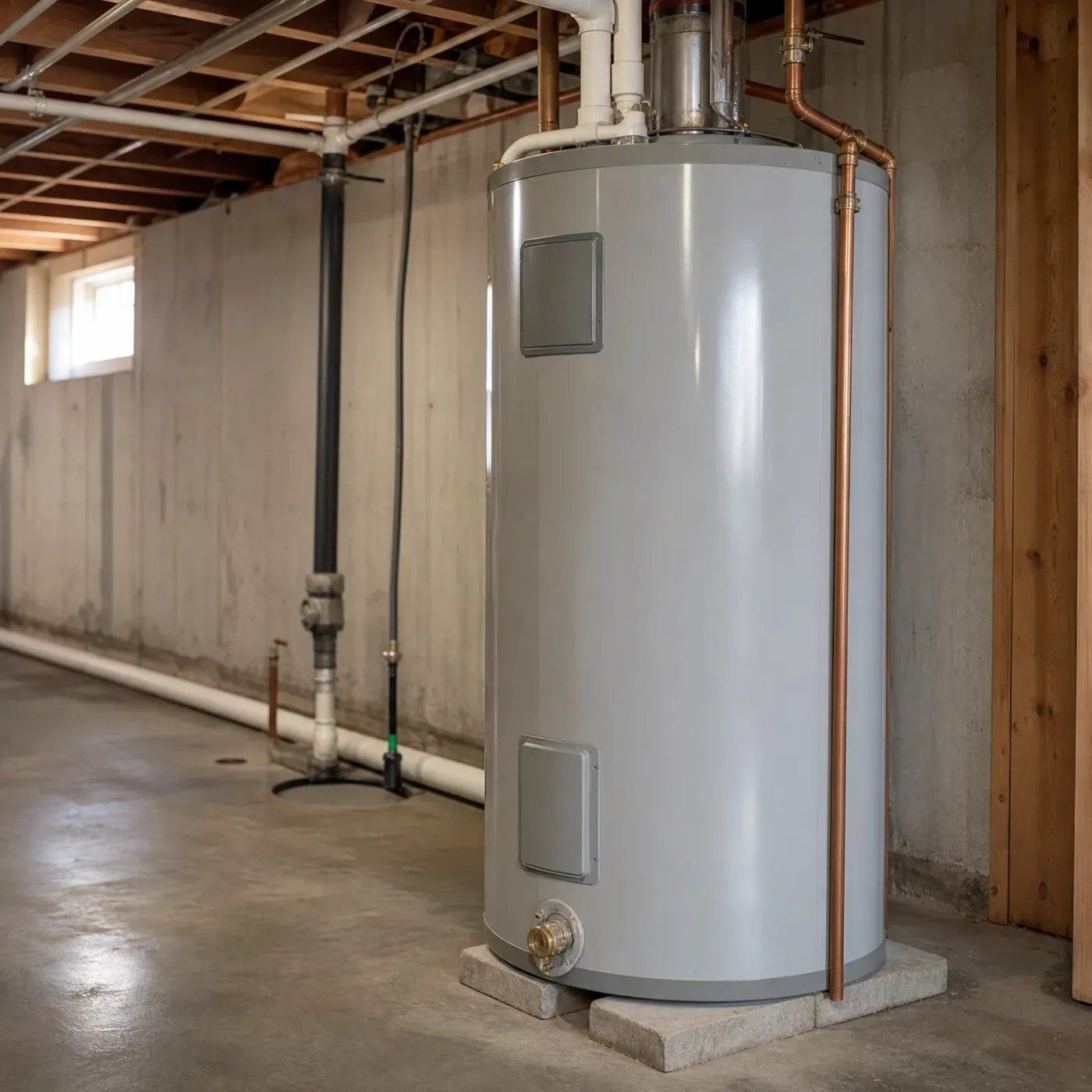
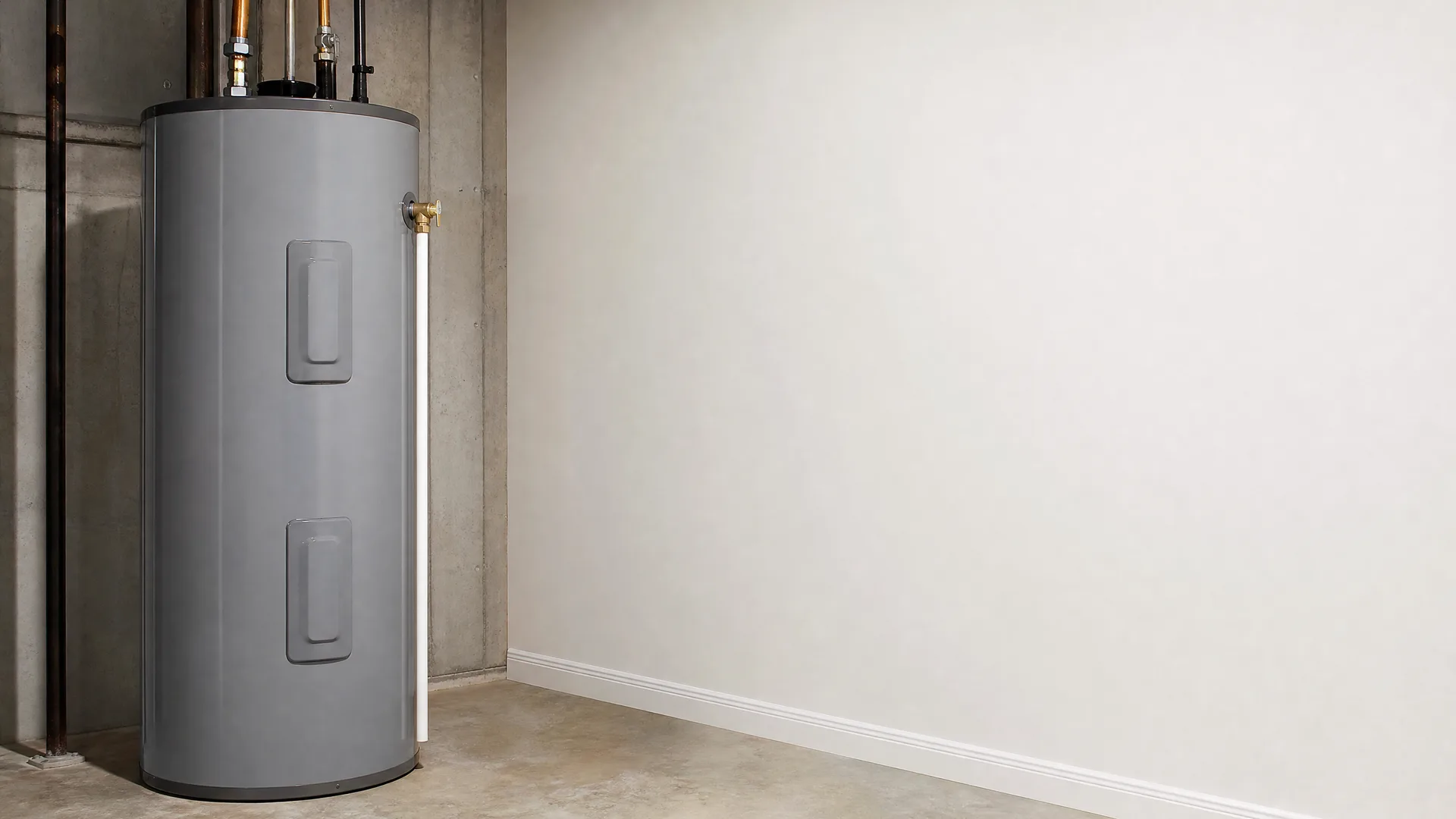
A gray cylindrical electric water heater with two access panels stands in a corner of a room with a concrete floor, connected to overhead pipes and a white drain pipe, beside a plain light-colored wall.

Why electric rates change the math

New Hampshire's electric rates run among the highest in the country, and a water heater that runs on resistance coils feels that in the monthly bill. Gas and propane water heaters burn fuel to heat the tank instead of drawing on that expensive power. If your home already has a gas or propane line run to it, a gas water heater usually costs less to operate month to month than an electric one, simply because of what electricity costs here.

A tall cylindrical water heater with copper and metal pipes at its top stands against a plain beige interior wall on a concrete floor, beside ductwork and a raised concrete step.

What an oil-heated home usually has

Most homes in New Hampshire heat with oil, which means a lot of houses never had a gas line installed at all. Without gas already run to the house, installing a gas water heater means bringing in a line or a propane tank, not just swapping one tank for another. An electric water heater, by contrast, only needs the wiring a water heater already uses, which is why it's often the simpler install where gas was never part of the house to begin with.

Gas, Propane, or Electric Water Heater

Gas or Propane

  • Most homes here don't have a gas main, so this usually means a propane tank set up alongside the oil tank already on the property.
  • Recovery is fast, so a full house of showers back to back doesn't leave the last person with cold water.
  • The tank still needs a power outlet for its control board and ignition, so it isn't fully exempt from an outage.
  • A propane water heater adds a second fuel delivery to manage alongside the oil that heats the house.
  • Installation has to account for venting to the outside, which an electric tank never needs.

Electric

  • No fuel line, no tank refill, no delivery schedule to track alongside the oil for the furnace.
  • Every kilowatt-hour it uses shows up at New Hampshire's electric rates, which run high compared to most of the country.
  • Recovery is slower than gas, so a tank sized too small for the household runs out of hot water sooner.
  • Venting isn't a factor, so the unit can go in tighter spaces without a flue to the outside.
  • If the power goes out, the water heater goes with it until electricity comes back.
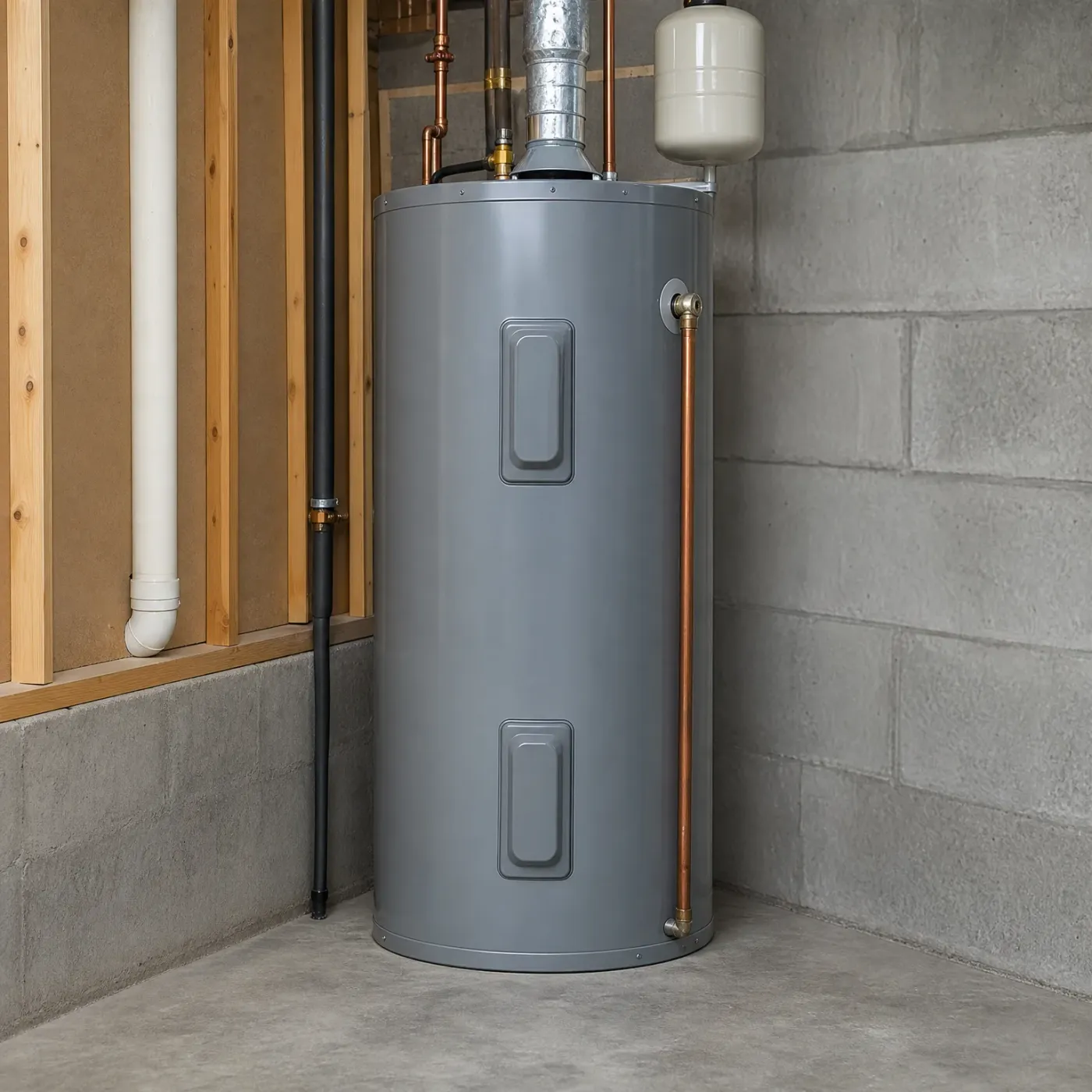
A gray cylindrical water heater with copper piping and an expansion tank stands in a basement corner beside a concrete block wall and exposed wood framing.

Electric, working as it should

This is a standard setup: copper lines, a drain pipe, and an expansion tank mounted above the unit. Electric water heaters like this one need no vent, so they tuck into a basement corner wherever the plumbing runs. As long as the coils are in good shape, recovery is steady and the tank just does its job.
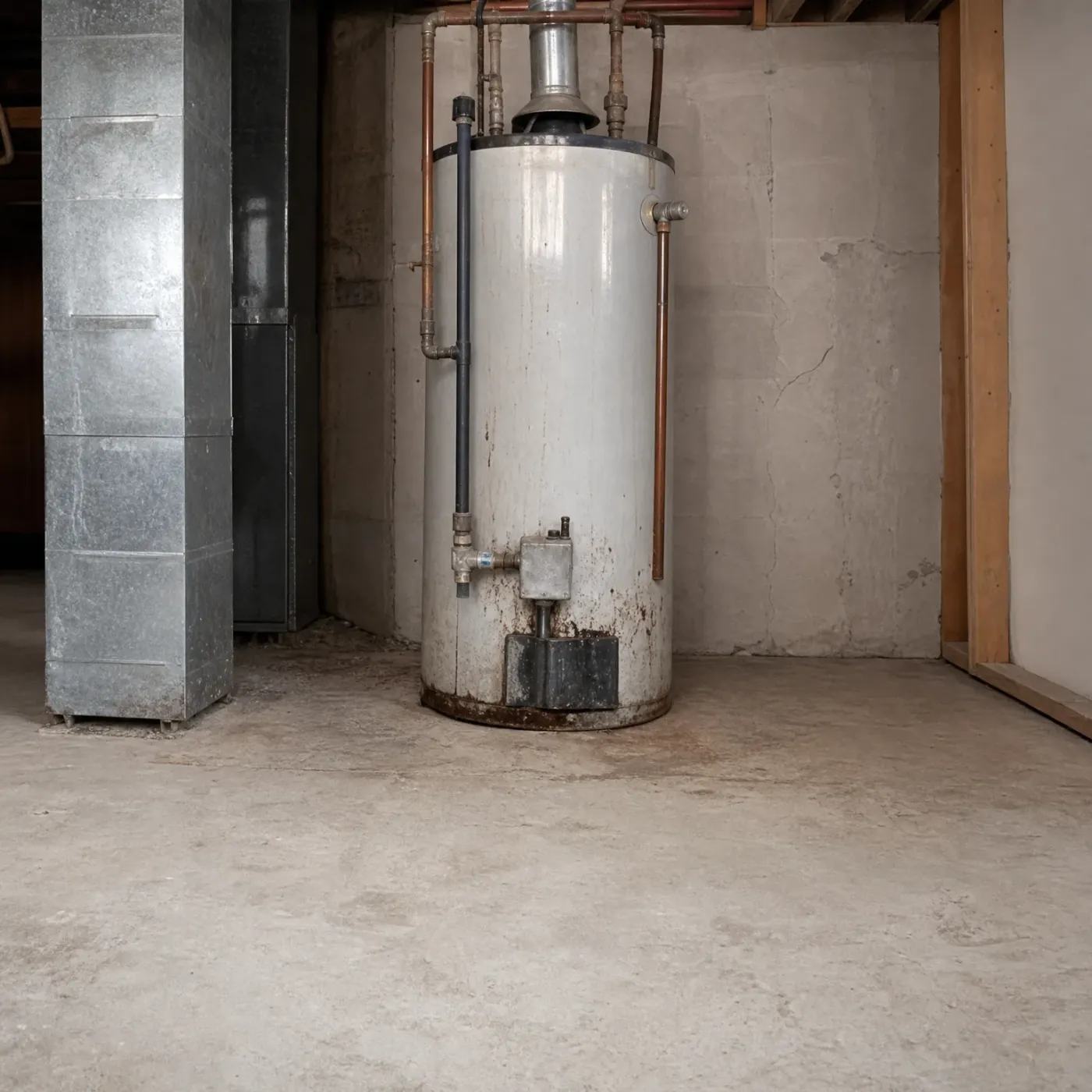

An old rusting cylindrical gas water heater with copper and steel pipes and a flue stands against a concrete basement wall beside metal ductwork on a bare concrete floor.

Gas, past its years

Rust and mineral buildup like this on the tank and fittings usually mean the unit is near the end of what it can do. The flue vent running up from the top has to stay clear for the gas to burn safely. Once corrosion gets this far, it's a sign to have it looked at rather than wait for it to fail.

A woman in a cream knit sweater sits in an armchair with her eyes closed and a slight smile, beside an open window showing orange autumn foliage, with a mug, books and a lit candle on a small side table.
An older man with gray hair and a beard leans back on a beige sofa with his eyes closed, in a sunlit room with potted plants, a wicker chair and large windows behind him.
A large white cylindrical water heater on concrete blocks in a basement with poured concrete walls, exposed joists, copper and PVC piping, and a small window.

A pro who works on water heaters

One installer gets your project, so there's no bidding war over it.

Describe your water heater job, and a local pro who handles it gets in touch.

Find a licensed pro

Sending the form costs nothing.

Why does your water heater cost so much to run

If your water heater is electric, you've probably already noticed it on the bill, especially once the oil furnace kicks on for the season and the house is drawing more power all around. Showers that turn lukewarm partway through, a tank that takes a while to recover after a load of laundry or a couple of showers back to back, these point to an electric unit working hard to keep up. A gas or propane water heater that's starting to struggle shows up differently: a pilot light that won't stay lit, a yellow flame instead of blue, or a faint smell near the tank. That last one isn't something to wait out.

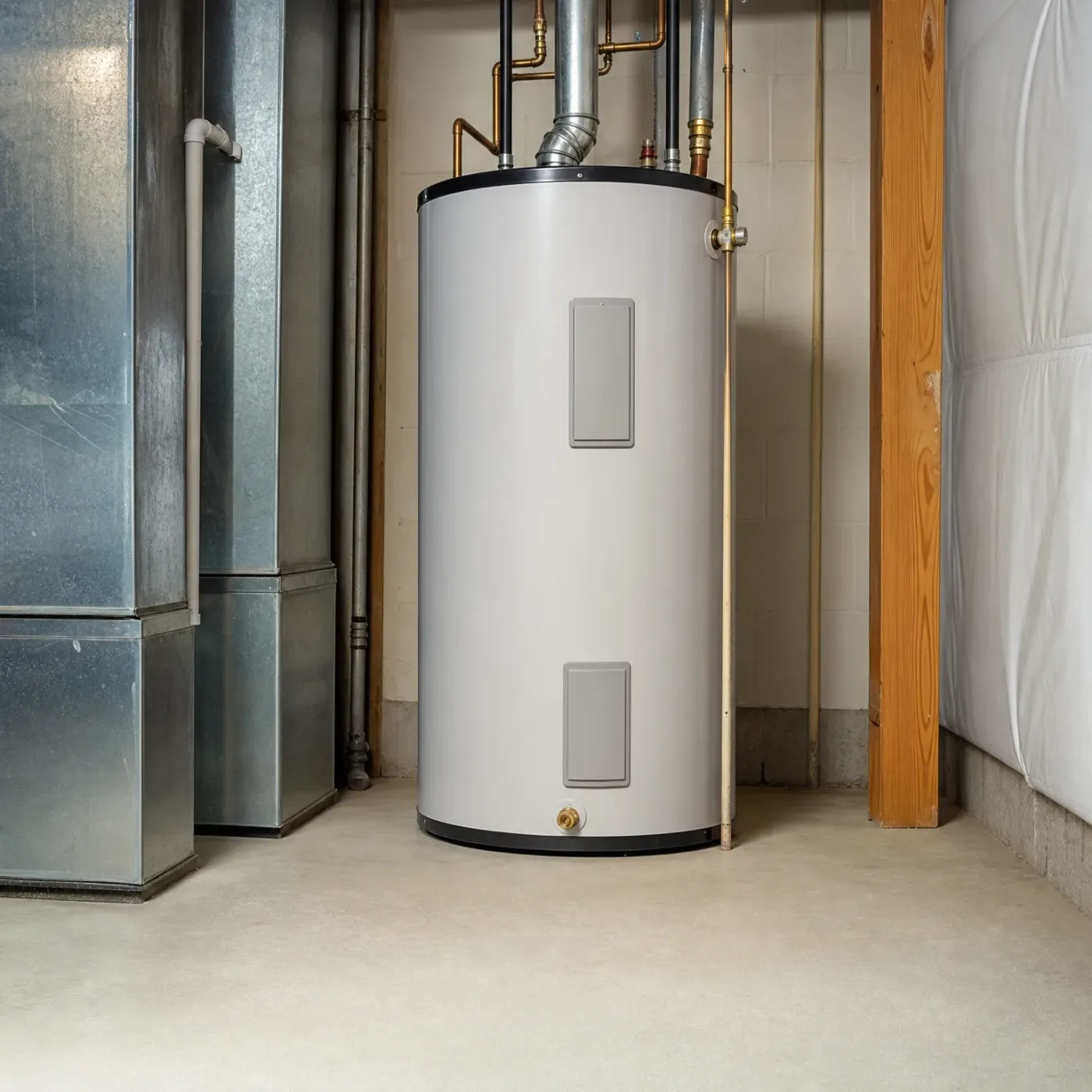
A white cylindrical water heater with two access panels stands on a concrete floor in a basement corner, beside galvanized ductwork, copper and metal pipes, a wooden post, and a concrete block wall.

Electric tank, standard install

This is a straight electric setup: copper lines in, a drain valve at the base, and the ductwork for the furnace running right beside it. No flue, no vent pipe, just the two element panels on the front doing the work.

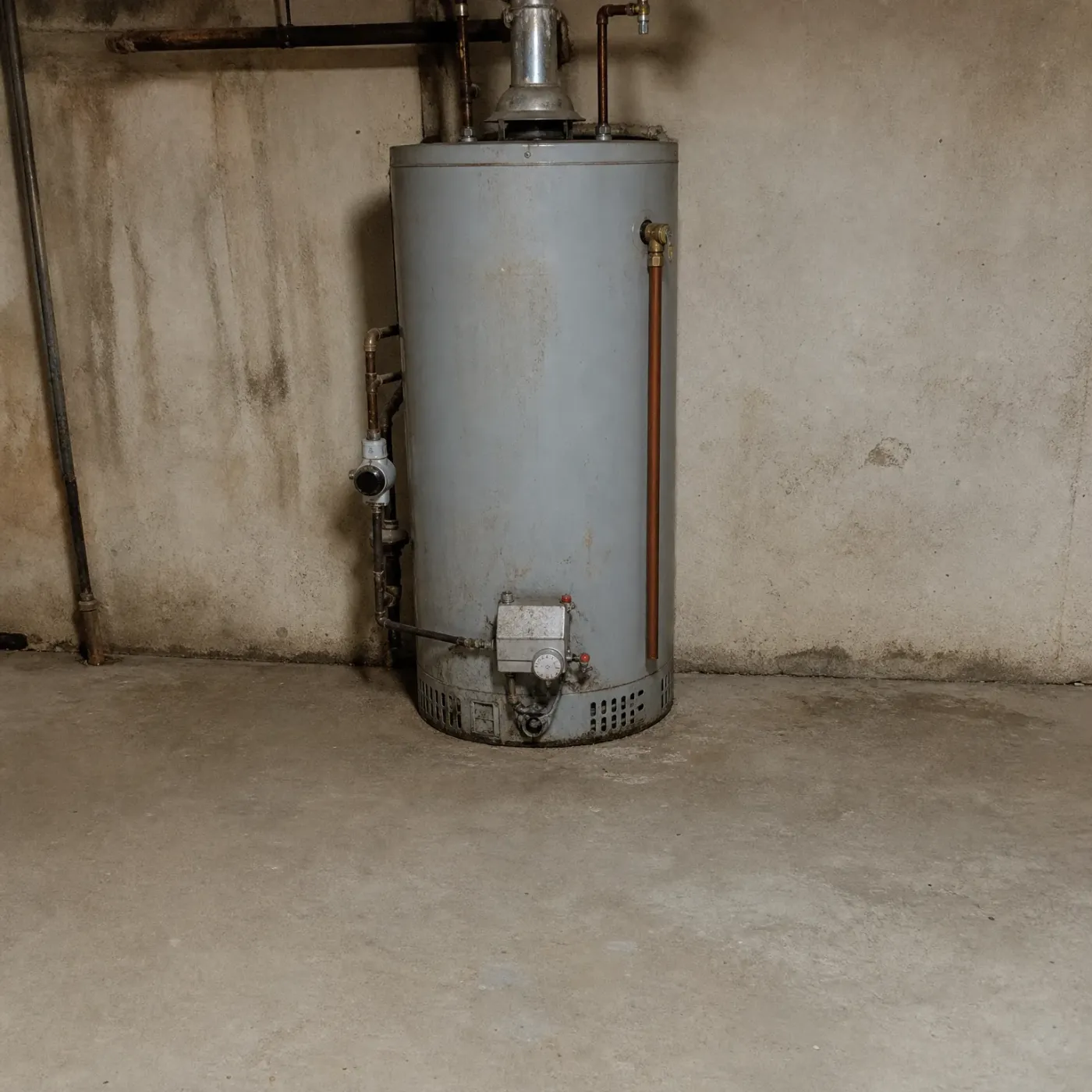
An older gray cylindrical gas water heater with copper and steel piping and a flue, standing on a concrete floor against a stained concrete wall.

Gas tank, older unit

This one vents through a metal flue in the ceiling and has a gas control valve at the base instead of a lower element panel. Against bare concrete with no finished wall behind it, you can see the pressure relief valve and the copper supply lines clearly, along with the flue connection a gas or propane tank depends on.

A woman with long gray hair wrapped in a checked blanket sits on a sofa by a window with yellow autumn foliage outside, with a lamp, framed picture and plant in the background.
An older woman in a cream knit sweater sits on a sofa by a window, looking out at sunlit trees with yellow and orange autumn leaves, with a bookshelf and lamp behind her.
A woman with gray shoulder-length hair in a dark knit sweater sits on a cushioned seat by a window, looking out at yellow autumn foliage, with a living room, armchair, houseplant and framed picture behind her.
An older woman with gray hair in a bun, wearing a cream knit sweater, sits on a sofa with a gray blanket and looks out a large window toward yellow-green autumn trees, with a lit table lamp and dark armchair behind her.

Running on propane

A propane water heater adds one more fuel to track alongside the oil tank, but it recovers fast and keeps the electric bill from climbing when the furnace is already drawing power.

Find a local pro

Running on electric

No tank to refill, no vent to run, but every gallon of hot water comes from resistance coils pulling power at New Hampshire's rates, and that shows up on the bill.

Find a local pro
A woman in a cream cardigan and jeans stands with one hand raised facing an open front door of a gray horizontal-siding house, with a black lantern wall light, a potted shrub with yellow flowers, and a stone-faced porch column.

How a tank actually decides when to fire

A gas or propane tank has a thermostat down by the gas valve, and it reads the water temperature right there at the bottom of the tank. When it drops a few degrees below the setpoint, the valve opens, the burner lights, and the flame heats the tank from underneath. That's why recovery is quick: the burner can push a lot of heat into the water fast. An electric tank works differently. Two heating elements sit inside the tank itself, one upper and one lower, and they take turns, the upper one satisfying first before the lower kicks in. Elements heat slower than an open flame, which is part of why recovery lags on electric.

None of that tells you which one is right for your house, your gas line situation, or what's already run to where the tank sits. That's the kind of thing worth having a local plumber look at before you decide, someone who installs both types around here and knows which one makes sense once they've seen your setup. A match puts you with one licensed contractor working in New Hampshire, not a handful of companies bidding for the job.

A living room corner with a light beige sofa holding a textured taupe cushion, a large ceramic vase of olive branches by a window, a framed neutral artwork on the wall, and a dark bowl with stacked books in the foreground.

39.5% of homes statewide heat with fuel oil

Almost four in ten homes here run on oil heat, yours maybe included, and that tank sits apart from the water heater question entirely. Oil heats the house. Whatever heats your water, gas, propane or electric, is a separate line on the bill worth getting right on its own.

ACS 2020-2024 5-year B25040

Propane costs more to install, since it means a tank and a line where none exists yet, but it keeps the water heater off an electric bill that's already carrying the furnace through the winter. Electric costs less to put in and needs no fuel to manage, but the coils draw on the same expensive power as everything else in the house. Either way, the choice is yours to make, not one with a single right answer for every house on your street. A local contractor who installs both kinds knows which one gives the fewest problems in a New Hampshire basement, whether that's venting a gas unit through an old chimney or running a new propane line out to a tank. When you ask for a match, you're connected with one licensed contractor local to you, someone who works on these installs every year and can tell you plainly what fits your house, not a handful of companies competing for your number.

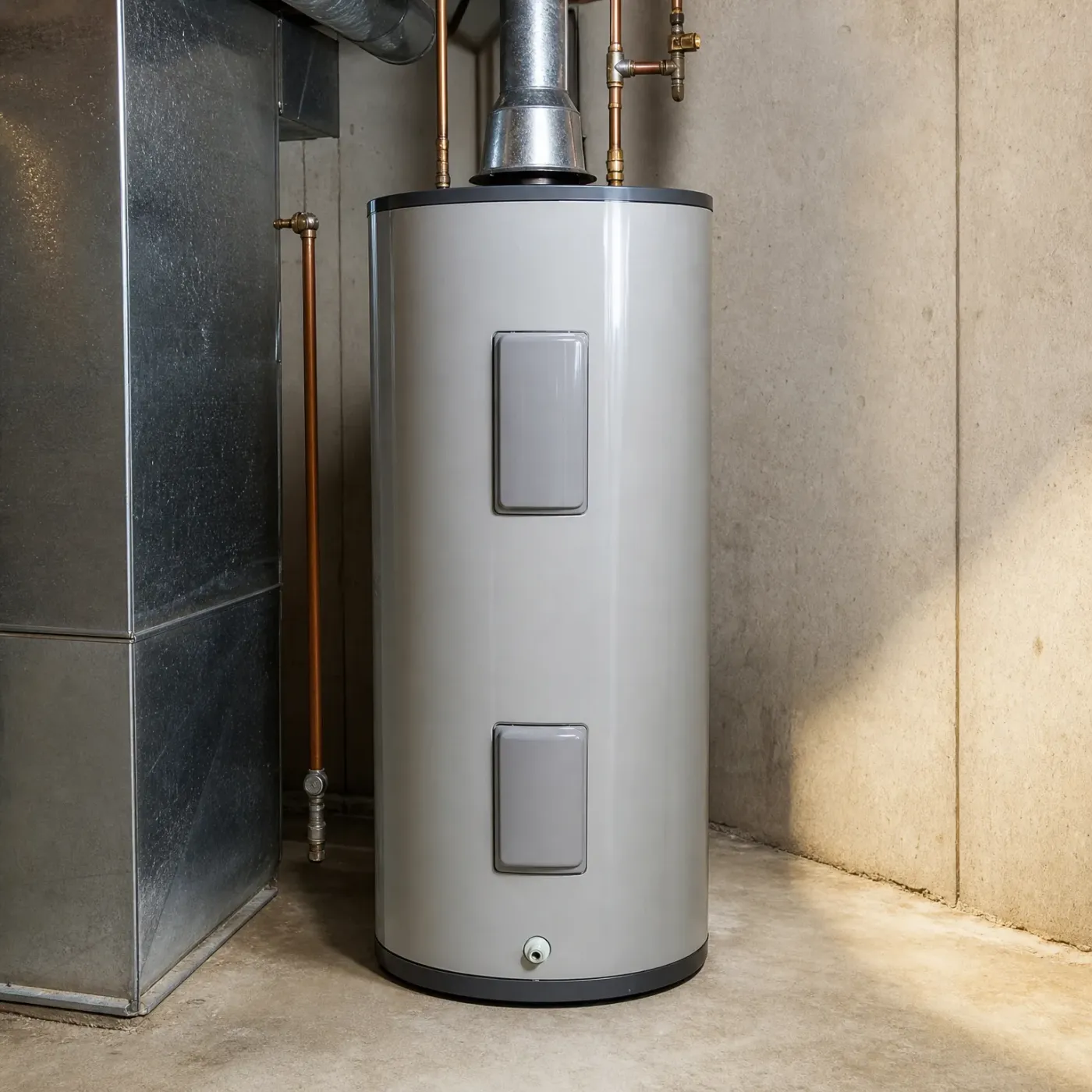
A gray cylindrical water heater with two access panels stands on a concrete floor in a basement beside metal ductwork, with copper pipes and a vent duct above.

The right pro for this job

Get a licensed local pro

Only one pro gets your request, so you hear from one company.

It costs nothing to send, and you don't have to hire anyone.